Handmade vs Factory Made Beaded Bags: Quality Compared(2026)
Handmade vs Factory Made Beaded Bags: Quality & Longevity Compared
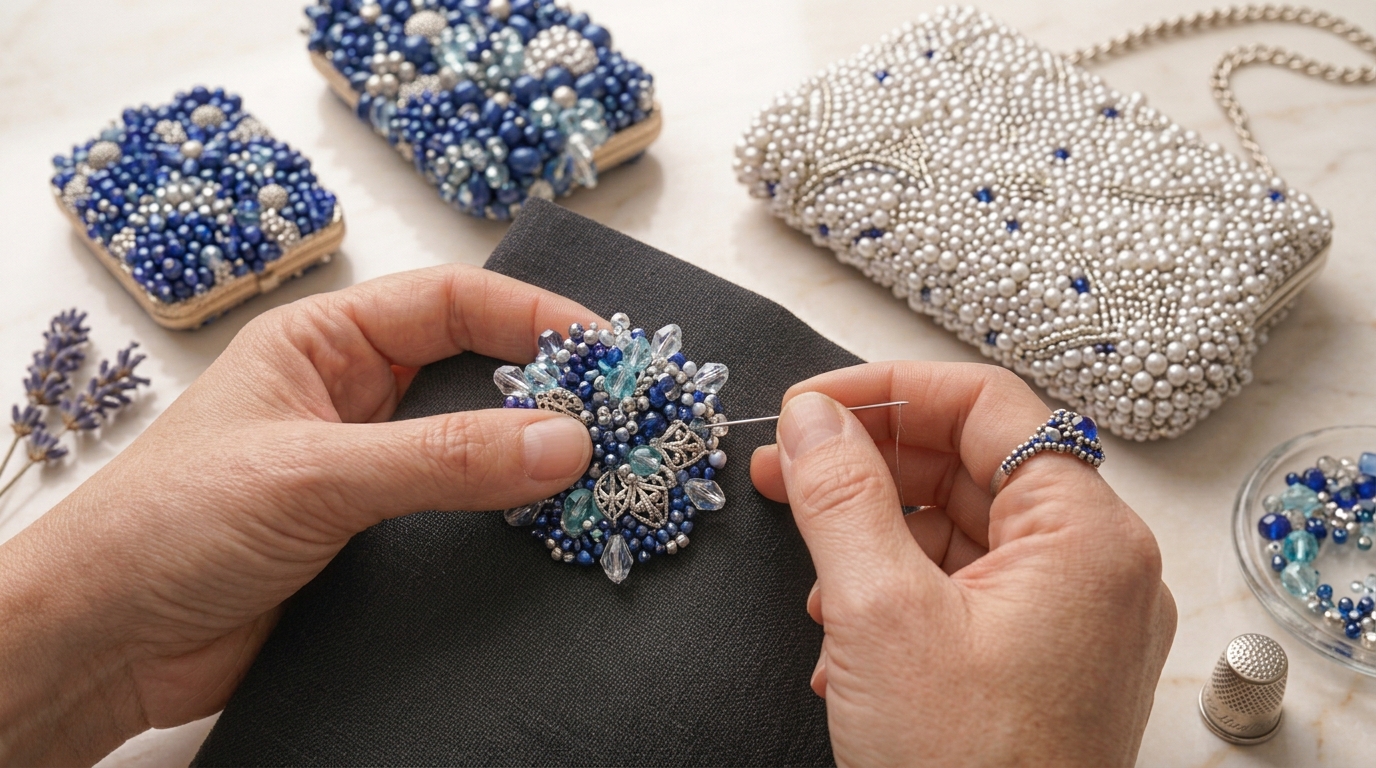
Handmade vs Factory made beaded bags.Handmade beaded bags are built one bead at a time, hand-stitched onto a fabric or leather base by an artisan, which typically means denser bead placement, stronger attachment, and a bag that can be repaired and passed down. Factory made beaded bags use machine-beaded panels or glued embellishments assembled at speed, which lowers cost but also lowers how much wear the beading can take before it loosens or falls off. The right choice depends on how long you want the bag to last and how the beading was actually applied not just the label on the product page.
Handmade vs Factory Made Beaded Bags:
Why This Comparison Matters Before You Buy
A beaded bag looks the same in a product photo whether it took an artisan three days to make or came off a production line in minutes. The bead pattern can look identical. The price, however, usually isn’t and neither is what happens to the bag after its first few outings.
Handmade vs Factory made beaded bags.If you’re choosing a beaded clutch for a wedding, a race day, or a gift, the construction method behind the beading is the single biggest factor in whether that bag survives one season or becomes a piece you reach for every year. This article breaks down exactly what separates handmade from factory made beading, how to tell the two apart before you buy, and which one makes sense for your specific occasion.
What Makes a Beaded Bag “Handmade”?
Handmade beading means each bead is individually attached usually stitched by a person, rather than applied by a machine in a continuous run. The process typically involves:
- Hand-sewing or hand-embroidering: beads onto a fabric or leather backing, bead by bead or in small clusters
- Manual pattern setting: where the artisan follows or adapts a design by eye and hand rather than a fixed machine template
- Individual thread anchoring: so beads are secured with multiple small stitches rather than one continuous line of adhesive or thread
- Finishing by hand: including trimming, backing reinforcement, and edge work
💡 CHAMMAQ INSIGHT: Because each bead is placed and secured individually, no two handmade pieces are ever perfectly identical even within the same design. Small variations in spacing or bead orientation are a natural signature of hand-beading, not a flaw.
This is a slower process than machine production. It’s also why hand-beaded pieces tend to carry a different price point than mass-produced equivalents the cost reflects labour and skill, not just materials.
Handmade vs Factory Made Beaded Bags:
How Factory-Made Beading Works
Factory or machine-made beaded bags are produced at scale using one or more of the following methods:
- Pre-beaded fabric panels: where beads are machine-embroidered onto large rolls of fabric and then cut into bag shapes
- Glued or hot-fixed embellishment: where beads or bead motifs are adhered to a surface rather than stitched
- Assembly-line construction: where cutting, beading, and assembly happen as separate automated or semi-automated steps
This approach allows for faster, more consistent production and typically a lower retail price. Consistency is a genuine advantage of factory methods every unit in a batch looks the same. The trade-off is usually in how securely the beads are attached and how the bag performs after repeated wear.
Handmade vs Factory Made Beaded Bags: Side-by-Side Comparison
| Factor | Handmade Beaded Bag | Factory Made Beaded Bag |
|---|---|---|
| Bead attachment | Individually hand-stitched | Machine-embroidered, glued, or hot-fixed |
| Production time | Hours to days per piece | Minutes to hours per unit (batch production) |
| Bead security over time | Generally stronger, more repairable | More prone to loosening or bead loss with wear |
| Design consistency | Natural, minor hand variation | Highly uniform across units |
| Repairability | Often repairable bead-by-bead | Often difficult or impossible to repair invisibly |
| Uniqueness | Each piece is subtly one-of-a-kind | Identical across the production batch |
| Typical price positioning | Reflects hand labour and skill | Reflects speed and scale of production |
| Best suited for | Occasions you’ll repeat, gifting, heirloom pieces | Occasional, low-cost, one-off use |
⚠️ COMMON MISTAKE: Assuming a bag is handmade because a listing uses the word “handcrafted” in the title. That word alone isn’t proof check the construction details described below before you buy.
How to Tell Handmade and Factory-Made Beading Apart Before You Buy
This is the part most buying guides skip. Here’s what to actually look for, whether you’re shopping in person or online.
1. Check bead spacing and alignment
Machine-beaded panels tend to have extremely uniform, grid-like spacing. Hand-beaded work usually shows slight, natural variation in spacing beads that are close but not machine-perfect, which is a sign of manual placement rather than a flaw to avoid.
2. Look at the back of the fabric
Turn the bag inside out if possible, or look closely at product images of the interior. Hand-stitched beading typically shows individual thread knots or stitch points on the reverse. Glued or hot-fixed beading often shows a flat, resin-like backing with no visible individual stitching.
3. Gently test bead security (in person only)
A single bead on a handmade piece is usually anchored independently, so it resists light pressure without shifting the beads around it. On glued or panel-beaded pieces, pressure can sometimes shift or loosen a small cluster at once, since the beads aren’t independently secured.
4. Assess weight and structure
Hand-beaded pieces, particularly those on woven or crocheted bead bases, tend to feel denser and more structured because of the volume of individually placed beadwork. Lightweight, flexible panels are more commonly associated with machine production.
5. Read the product description for process language
Listings that describe how the piece was made hand-stitched, hand-woven, individually beaded by an artisan are giving you verifiable information. Listings that only describe what it looks like (colour, shape, occasion) without mentioning process are giving you less to go on.
Does It Matter for Longevity? Yes Here’s Why
The construction method directly affects how a beaded bag ages:
- Hand-stitched beading: distributes stress across many individual anchor points. If one bead loosens, it’s typically an isolated repair rather than a cascading failure.
- Glued or hot-fixed beading: relies on adhesive bonds that can weaken with heat, humidity, friction, or time meaning bead loss can spread once it starts.
- Machine-embroidered panels:are consistent when new, but the stitching is optimised for speed and uniform tension rather than long-term durability under repeated handling.
🛍️ BUYING TIP: If you’re buying a beaded bag for a single event and don’t expect to use it again, factory-made construction may be a perfectly reasonable, budget-conscious choice. If you want a bag that survives years of wear, travel, and repeat wear across multiple events, prioritise hand-stitched construction.
Handmade vs Factory Made Beaded Bags:
Which One Should You Choose? A Simple Decision Framework
If you’re buying for a one-off event with no plans to reuse the bag → factory-made construction can be a practical, lower-cost option.
If you’re buying for a recurring occasion (weddings you’ll attend across multiple years, race season, regular evening events) → choose hand-stitched construction for durability under repeated use.
If you’re buying as a gift, bridesmaid keepsake, or a piece meant to be kept long-term → hand-beaded construction offers better repairability and a more personal, one-of-a-kind quality that suits sentimental purchases.
If uniqueness matters to you (not wanting to see the same bag on someone else) → hand-beaded pieces carry natural variation that mass-produced panels can’t replicate.
Caring for a Handmade Beaded Bag
Because hand-beaded pieces are built from individually secured beads on a fabric or leather base, general care principles that apply to delicate embellished textiles are worth following: store the bag away from direct pressure or crushing, keep it away from prolonged moisture, and handle beaded surfaces gently rather than by the beading itself. If a bead does loosen over time, hand-stitched construction generally makes isolated repair more realistic than it would be on glued or panel-beaded pieces.
Where Handmade Craftsmanship Fits Into CHAMMAQ
CHAMMAQ’s beaded bags and clutches are built around the hand-beading approach described above individually placed beadwork rather than machine-panel production. If you’re comparing options for an upcoming wedding, race day, or gifting occasion, the CHAMMAQ collection of handmade beaded bags is a natural next step once you know what to look for in construction quality.
Explore the handmade beaded bag collection to see the hand-stitched detailing described in this guide up close.
Conclusion
The difference between handmade and factory made beaded bags isn’t just marketing language it’s a construction decision that shapes how the bag looks, feels, and holds up over time. Handmade beading takes longer to produce and generally costs more, but it offers stronger bead security, individual character, and a piece that can realistically be repaired and kept for years. Factory-made beading offers consistency and a lower price point, suited to occasional or budget-conscious use.
Knowing how to spot the difference between Handmade vs Factory made beaded bags, bead spacing, backing construction, weight, and how the listing describes the process puts the decision in your hands rather than relying on a product label alone.