



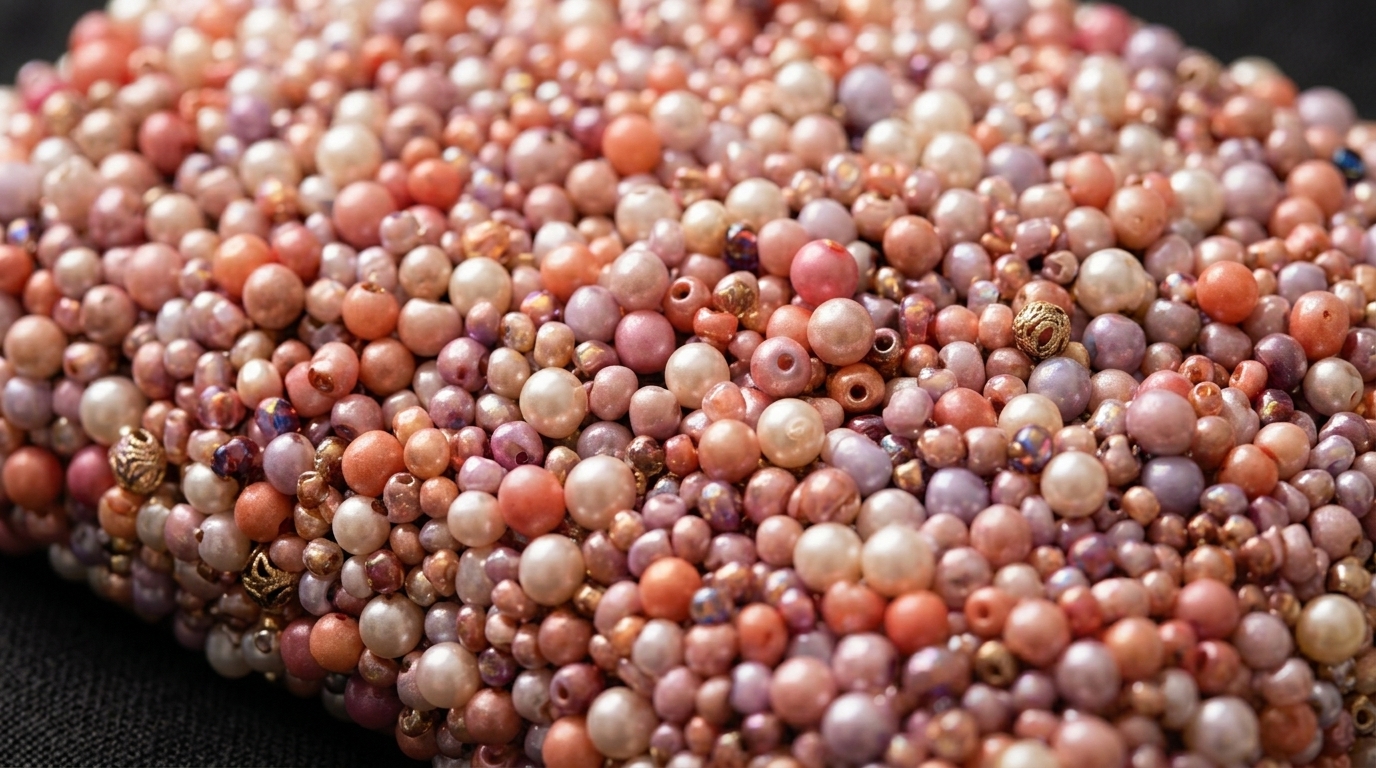
Types of Beads Used in Handcrafted Bags: Acrylic, Glass & Pearl
Types of Beads Used in Handcrafted Bags: Acrylic, Glass & Pearl
Handcrafted beaded bags are typically made using three main bead types acrylic beads (lightweight, budget-friendly, highly colourful), glass beads (heavier, more reflective, and prized for their durability and shine), and pearl beads (glass or acrylic beads coated to mimic pearl for a soft, classic finish). Each bead type changes the weight, shine, drape, and overall feel of the finished bag, which is why understanding them helps when comparing handmade pieces.
If you’ve ever picked up two beaded bags that looked almost identical but felt completely different in your hands, the bead material is usually why. The beads used in artisanal bag beading aren’t just decorative they determine how heavy the bag feels, how it catches the light, how it drapes when it’s carried, and how well it holds up over time.
This guide breaks down the three bead types most commonly used in handcrafted beaded bags, how each one behaves once it’s stitched onto fabric, and what to look for if you’re trying to judge the quality of a piece before you buy it.
What Makes a Bead “Right” for a Handmade Beaded Bag?
Not every bead used in jewellery-making translates well to bags. A bead destined for a bracelet only has to support its own weight on a wrist. A bead sewn onto a bag has to be repeated hundreds or thousands of times across a panel of fabric, and the finished piece still needs to be light enough to carry, flexible enough to hold its shape, and durable enough to survive being handled, opened, and set down throughout an evening.
That means beading artisans are usually weighing four factors at once:
- Weight: how heavy the bead is when multiplied across an entire bag surface
- Shine and light reflection: how the bead catches light against fabric
- Durability: whether the bead resists chipping, fading, or cracking with handling
- Cost and accessibility: which affects the price point of the finished piece
Acrylic, glass, and pearl beads each answer these four questions differently, which is why the same bag “shape” can feel and look completely different depending on the bead used.
Acrylic Beads: Lightweight, Colorful, Versatile
Types of Beads Used in Handcrafted Bags: Acrylic, Glass & Pearl. And of the type is Acrylic beads are made from a lightweight plastic material and are one of the most widely used bead types in handcrafted bags, particularly for pieces with bold colour or larger surface coverage.
Why artisans use them:
- Significantly lighter than glass, which matters once thousands of beads are sewn onto a single bag
- Available in a very wide range of colours and finishes, including matte, glossy, and opaque options
- More affordable than glass or crystal, which keeps handmade pieces accessible
What to expect from acrylic-beaded bags: They tend to feel lighter to carry and are well suited to bags with dense, all-over beading, since the cumulative weight stays manageable. The trade-off is that acrylic doesn’t have the same depth of shine as glass it tends to reflect light more softly rather than sparkling.
💡 PRACTICAL TIP: If a fully beaded bag feels surprisingly light for how much surface is covered in beads, it’s very likely acrylic that’s not a quality flaw, it’s a material trait that makes larger beaded designs wearable.
Glass Beads: Weight, Shine, and Old-World Craftsmanship
Glass beads including small seed beads, which are among the most traditional beads used in hand-beading are prized for their depth of colour and the way they catch and refract light. Within glass beading, Czech glass beads and Japanese Miyuki beads are widely regarded across the craft as benchmark-quality seed beads, known for their consistency in size and shape.
Why artisans use them:
- Glass has more optical depth than acrylic, producing a richer shine and more vivid colour saturation
- Seed beads allow for very fine, intricate patterns because of their small, uniform size
- Glass tends to hold its colour and finish well over time compared to lower-grade plastics
What to expect from glass-beaded bags: They generally feel noticeably heavier than acrylic pieces of a similar size, because glass is a denser material. That added weight is often read as a quality signal a densely glass-beaded clutch has a substantial, “worth something” feel in the hand. The trade-off is that fully glass-beaded designs are heavier to carry through a long event.
⚠️ COMMON MISTAKE: Assuming a heavier bag is automatically better quality. Weight tells you the bead material, not the skill of the beadwork. A light acrylic-beaded bag can be just as well constructed as a heavy glass-beaded one they’re simply different material choices for different needs.
Pearl Beads: Classic Elegance
Types of Beads Used in Handcrafted Bags: Acrylic, Glass & Pearl. “Pearl”is a type of beads used in beaded bags are almost always imitation or glass pearls a glass or acrylic bead core coated in a pearlescent finish to mimic the soft lustre of a real pearl, rather than a genuine pearl. This is standard across the beading and fashion accessories industry, not a shortcut specific to any one maker.
Why artisans use them:
- They deliver a soft, luminous finish that reads as classic and refined rather than sparkly
- They’re significantly lighter and more affordable than genuine pearls, making pearl-effect beading practical at scale
- The pearlescent coating pairs well with both glass and acrylic beads in mixed designs
What to expect from pearl-beaded bags: A softer, more muted shine than glass or crystal beading, with a rounded, uniform look. Because the coating sits on the surface of the bead, very heavily handled pieces can show wear on the finish over time the same as any coated bead product.
👗 STYLING TIP: Pearl-beaded pieces tend to photograph and read as “classic” rather than “sparkly,” which is why they’re often chosen for designs meant to feel timeless rather than statement-making.
Comparing Bead Types at a Glance
| Bead Type | Relative Weight | Shine/Light Reflection | Typical Look | Price Positioning |
|---|---|---|---|---|
| Acrylic | Light | Soft, muted shine | Bold colour, playful or contemporary | Most accessible |
| Glass (incl. seed beads) | Heavier | High shine, refractive sparkle | Rich, intricate, traditional beadwork | Mid-to-higher |
| Pearl (glass/acrylic pearl coating) | Light–moderate | Soft, luminous lustre | Classic, understated elegance | Varies by base bead |
Types of Beads Used in Handcrafted Bags: Acrylic, Glass & Pearl: How Bead Choice Affects the Finished Bag
Beyond looks, bead material has a real, practical impact on how a bag performs once it’s finished:
- Drape and structure: Heavier glass beading tends to give a bag more structured “hang,” while lighter acrylic beading allows for more fluid movement.
- Handling over time: All types of beads used in handcrafted bags: Acrylic, Glass & Pearl surfaces should be handled with reasonable care, but denser glass beadwork is generally more resistant to surface wear than lightweight coated beads.
- Comfort for extended carrying: For pieces meant to be carried through a full evening, overall weight is worth considering alongside how the bag looks in photos.
None of this makes one bead type objectively “better” it makes them suited to different priorities, whether that’s maximum shine, everyday lightness, or a classic finish.
Types of Beads Used in Handcrafted Bags: Acrylic, Glass & Pearl: How to Tell Bead Types Apart When Shopping
“Since most people can’t handle a bag in person before buying online, here’s a simple framework for reading the types of beads used in handcrafted bags from photos and product descriptions:”
- Look at the light reflection. Sharp, glassy sparkle usually indicates glass or crystal beads. Soft, even light suggests acrylic.
- Check for uniform roundness with a satin sheen. That’s the signature of pearl-coated beads.
- Read the product description for material terms such as “glass beads,” “seed beads,” “acrylic,” or “pearl-effect” reputable handmade sellers typically state this.
- When in doubt, ask. A maker who can clearly explain what beads were used in a piece is generally a good sign of craftsmanship transparency.
Common Mistakes When Evaluating Beaded Bag Quality
- Judging quality by weight alone. As noted above, weight reflects material, not necessarily workmanship.
- Assuming all “pearl” beads are genuine pearls. In beaded bag construction, “pearl” almost always refers to a coated glass or acrylic bead this is standard practice, not a defect.
- Ignoring bead consistency. Whatever material is used, evenly sized, consistently spaced beading is one of the clearer visual signs of careful hand-beading.
Understanding what a beaded bag is actually made of makes it much easier to know what you’re choosing between a lightweight, colour-forward acrylic design, a richly reflective glass-beaded piece, or a soft, classic pearl finish. Each is a legitimate craftsmanship choice suited to a different kind of bag and a different kind of wearer.
If you’d like to see how these Types of Beads Used in Handcrafted Bags: Acrylic, Glass & Pearl come together in finished pieces, explore CHAMMAQ’s handmade beaded bag collection to compare styles, finishes, and beadwork up close.
